Showing posts with label historical memory. Show all posts

Tuesday, August 19, 2014

The Future as a Concept in National Security Law


I will follow up soon with a post on history and the crisis in Ferguson, Missouri.  Today I'm posting a new paper from a conference on The Future of National Security Law.  The topics of race and national security are intersecting before our eyes. But the paper takes up something more abstract:  the concept of "The Future."  Here's the abstract:

The Concept of the Future in National Security Law
With their focus on the future of national security law, the essays in this issue share a common premise: that the future matters to legal policy, and that law must take the future into account. But what is this future? And what conception of the future do national security lawyers have in mind? The future is, in an absolute sense, unknowable. Absent a time machine, we cannot directly experience it. Yet human action is premised on ideas about the future, political scientist Harold Lasswell wrote in his classic work The Garrison State. The ideas about the future that guide social scientific work are rational predictions, he suggested.

If law is premised on ideas about something unknowable, something that can, at best, be a prediction, then it seems important to examine what those ideas, assumptions and predictions are. This essay examines future-thinking in prominent works related to national security, including the ideas that the future is peacetime, a long war, a “next attack,” and the future as a postwar. Drawing from scholarship on historical memory and conceptions of temporality, this essay argues that understandings of the future depend on more than the rational empirical predictions that Lasswell had in mind. The future is a cultural construct that depends in part on the way we remember the past. It does not exist apart from the politics and values that inform our perceptions. The future does not unfold on its own. We produce our future through both our acts and our imaginations. Culture matters deeply in this context, for the future we imagine is a well-spring of law.

Monday, August 4, 2014

Legal History as Foreign Relations History

I've just posted a new paper, Legal History as Foreign Relations History. Written for the new edition of a leading work on methodology in foreign relations history, I challenge the field's traditional skepticism about law's relevance to international affairs. Many grad students and newer scholars are incorporating the history of human rights and international law into their work, and my intent is to be helpful to those historians, and to build a bridge between fields.  Here's the abstract:

This paper is for a leading work on the methodologies of foreign relations history. Traditionally, diplomatic historians have been skeptical about law as a causal force in international relations, and have often ignored it. Challenging that assumption, this essay shows that law is already present in aspects of foreign relations history scholarship. Using human rights as an example, I explore the way periodization of legal histories is tied to assumptions and arguments about causality. I illustrate the way law has worked as a tool in international affairs, and the way law makes an indelible mark, or acts as a legitimizing force, affecting what historical actors imagine to be possible. Drawing from Robert Gordon’s influential work on the methodology of legal history, the essay shows the way law can help to constitute the social and political context within which international affairs are conducted. I argue that the presence of law and lawyers in the history of U.S. foreign relations is too central to be ignored.

For a scholar without legal training, taking up law-related topics can pose special challenges. This essay ends with a Legal History Survival Guide that includes advice about how to get started and how to avoid mistakes.

Friday, January 31, 2014

War and Peace in Time and Space


In a few different talks this semester, I plan to build on the ideas in my last book, and finally take up a question I did not previously have a good answer to.  The book, War Time: An Idea, Its History, Its Consequences, critically analyzes the way the concept of “wartime” works in law and public policy.  It focuses on war and temporality, arguing that the ideas about war and time that are implicit in law and policy (e.g. that wartime and peacetime are distinct, and follow each other in sequence) are in tension with the history of U.S. military engagement, which has been persistent, not episodic. 

When I gave talks about the project, I was often asked about whether space mattered – essentially whether I should consider time and space together.  I would answer that yes, space/geography is important to American war in part because U.S. military action takes place outside U.S. territory, and, relying on Catherine Lutz’s work, some domestic communities, especially communities with military bases, experience directly domestic costs of war, while other areas are not directly affected.  But time and space did not come together in the work itself.  I figured that the topic of war and time was important enough to be the singular focus of the book.

But I am occasionally asked to say something about peace, and that has finally helped me with how to think about war’s times and spaces together.  The most helpful provocation was an invitation from Yxta Murray of Loyola Law School to speak at a symposium on Law, Peace, and Violence: Jurisprudence and the Possibilities of Peace, at Seattle University School of Law in March. My difficulty: what to say about “peacetime” when I think there is, essentially, no such thing.  Yxta’s generative call for papers seemed to require more than a suggestion that peacetime is an anachronism – in part because peace is such a fervent hope, and peacefulness has been an important political strategy for social movements.

The answer, which I am still working out and which may not be fully satisfactory for Yxta’s conference, was to turn to scholarship on spatiality. When I began working on temporality, I found my way to a tremendously interesting literature on the history and culture of time.  The same is true of space, with developing new work in critical geography. This is helping me to see that my initial thoughts about wartime and space were too simplistic.  And many law-related works that take space or place into account are similarly limited.  When space or place are invoked, sometimes that just means focusing on the local, or perhaps being comparative.  In this way of thinking, there is an implicit normative space, which is the nation.  All else is a departure. But this is, ultimately, not very interesting or helpful.

I started by returning to Stephen Kern, The Culture of Time and Space, and looking carefully at his chapters on spatiality, and to Mary Favret’s focus on war and distance.  And I am finding my way into critical geography.  The argument for the peace conference is falling into place: that peace is not a time in the United States, it is a geography.  The geography of peace is driven in part by social class.  Those engaged in the work of American war (soldiers, reservists, military contractors, their families and communities) have a direct experience of “wartime,” while the rest of us can go about our daily lives minimally affected by American military engagement.  Whether it is wartime and peacetime within the United States depends upon who you are and where you live. There are consequences of this for the politics of war, and for political checks on presidential war power – but this will await another paper.  For now, thinking about peace as a geography can be a way of thinking about time and space as different yet intersecting dimensions of the culture and experience of American war.

My first take on this will be a lecture at the Robert S. Strauss Center at the University of Texas next week.  The abstract is below.
In law, history and public policy, we conventionally divide the past into wartimes and peacetimes.  Peacetime is thought to be normal time, and wartime is exceptional.  Harsh wartime policies are tolerable in part because they are temporary. In the long war-era of the 21st century, these temporal assumptions have been remarkably persistent, with President Obama and others suggesting that we will at some point return to peacetime.  This lecture will begin with a critique of wartime as a temporal concept, drawing upon my recent book War Time: An Idea, Its History, Its Consequences.  If war’s time limits have eroded, what has become of “peacetime”? Going beyond the wartime critique, I will argue that for the United States “peace” is not a time, but is a spacial concept.  It is because peace is experienced geographically, rather than temporally, that much of the U.S. population can experience peace, while war’s violence is the province of its soldiers and of those who reside in the places of its export.
Take two will be in Seattle, and take three will be at a symposium on The Future of National Security Law at Pepperdine. Then I hope to take the spatial analysis in a different direction, focusing more on a global community of the surveilled that is produced by contemporary security practices for a symposium at Yale’s Center for Historical Enquiry and the Social Sciences. This blog was a helpful place for me to work out the War Time ideas, so I hope you will indulge this new project.  Comments are open -- with thanks in advance for your reading suggestions!

Cross-posted from Balkinization.

Sunday, December 4, 2011

Roundtable: Pearl Harbor: 70 Years Later

The Society for Historians of American Foreign Relations has posted an excellent Roundtable for the seventieth anniversary of Pearl Harbor:  
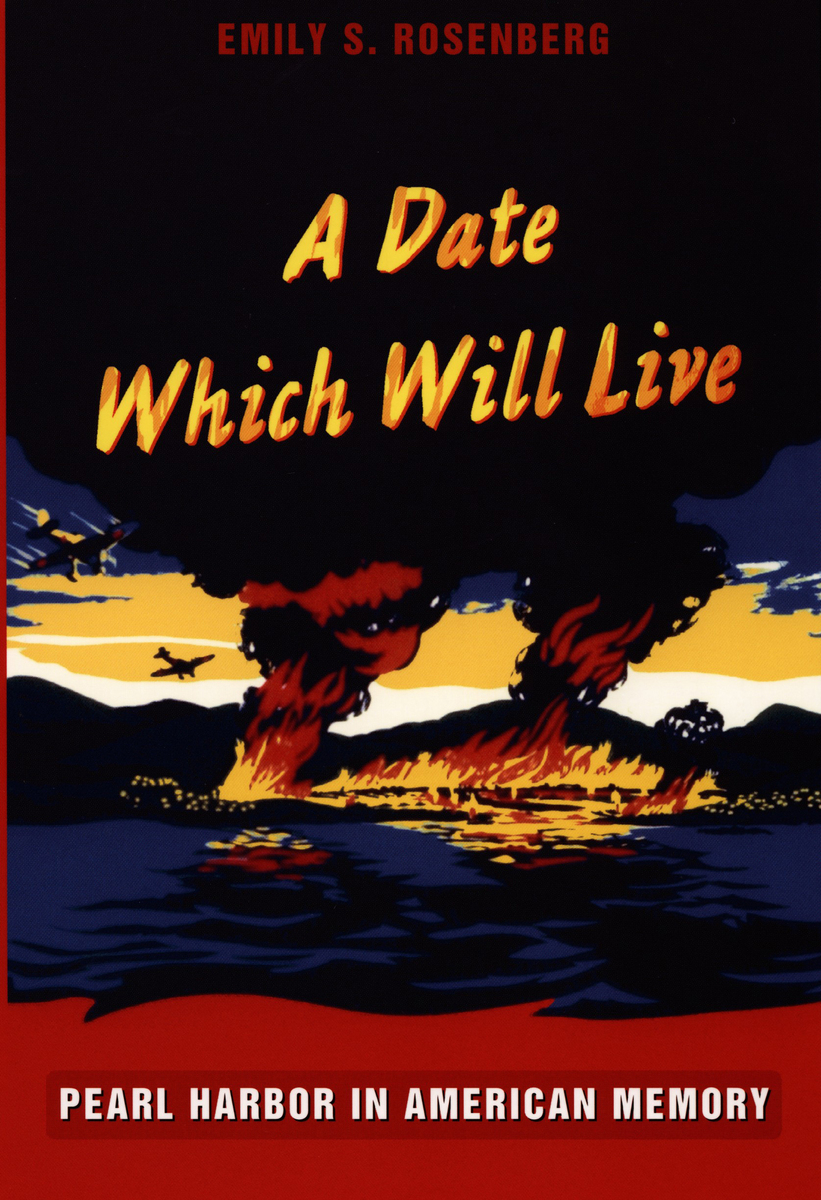
Japan’s surprise attack of Pearl Harbor on December 7, 1941 was a dramatic event that resulted in the destruction and decapitation of eighteen U.S. vessels and 188 planes, as well as the death of over 2,400 Americans. The experience was spectacular and horrifying. Yet the impact of the military operation far transcended the immediate damages it inflicted on the strategically valued harbor. Throughout the years afterwards, the “day of infamy” would yield far-reaching influence on politics, diplomacy, society, and culture in the United States, Japan, Hawai’i, and other parts of the world.

SHAFR.org is proud to present a roundtable on the Pearl Harbor attack as we approach its seventieth anniversary. We have asked four historians—Emily S. Rosenberg, Greg Robinson, John Gripentrog, and Yujin Yaguchi—to reflect on this fateful experience and address its broader significance. The contributors offer insight on a wide range of issues, concerning politics, diplomacy, memory, popular culture, racism, and education. We hope this forum will aid readers in grasping the complexity of this important event.
The entries are:

Emily Rosenberg,  Forgetting Pearl Harbor

Greg Robinson,  Pearl Harbor and Japanese Americans: Another Sort of Infamy

John Gripentrog, Pearl Harbor: The Road to Irreconcilable Worldviews

Yujin Yaguchi, Remembering Pearl Harbor in Hawai‘i: A Reflection on an Annual Workshop for U.S. and Japanese Secondary School Teachers