Showing posts with label World War II. Show all posts

Sunday, May 10, 2015

Jeannette Rankin and the 1940 Election as a War Referendum

I am exploring the history of efforts to amend the constitution to include a requirement for a popular vote before entering a foreign war in one of my chapters in my current book project. One of the arguments I'll make -- previewed this Tuesday at Stanford, where I'm giving the David M. Kennedy Lecture on the United States and the World -- is that sometimes elections have served as war referenda. Here's a snippet, featuring Congressmember Jeannette Rankin of Montana.

The most important moments of democratic engagement over the war powers [for WWI and II] were the elections preceding the war declarations. The elections of 1916 and 1940 were, in essence, referenda on war. Since 1914, there had been efforts to amend the constitution to enable some sort of popular participation in decisions to go to war. But an important moment for the public to register their sentiment was already there: the power to elect not only the Commander in Chief, but also the members of Congress who would vote for or against war.

Nothing more strongly illustrates this point than the success of a Republican candidate in the 1940 election. Wendell Wilkie, the Republican presidential candidate, was defeated by Franklin D. Roosevelt, of course. But the State of Montana would send back to the House a candidate who had first captured the nation’s attention when, in April of 1917, she cast the first vote ever by a woman in Congress, a vote against the declaration of war with Germany.

Jeannette Rankin had been a suffrage organizer before she ran for political office for the first time in 1916. Her platform included preparedness for coastal defenses, as a way to avoid war. It was her widely publicized vote against war that shaped the course of her political life in later years. Unable to hold her seat in 1918, Rankin would be out of office -- until 1940.

In the interim, she worked for pacifist organizations and lobbied for constitutional reform of the war powers, believing that the people’s voice must be heard through a referendum before the nation went to war. In 1940, she challenged a weak incumbent, running an anti-war campaign. “By voting for me,” she said in a campaign speech, “you can express your opposition to sending your son to foreign lands to fight in a foreign war.”[i] The people of her district could vote against war by voting for Jeannette Rankin.

Elected by a comfortable margin, she predicted that, unlike the flurry of attention she received in 1917, “no one will pay attention to me this time,” since it was no longer unusual for a woman to serve in Congress.[ii]

Once in office, Rankin offered an amendment to the Lend-Lease bill to require specific congressional approval for the president to send American troops abroad. Twice in the spring of 1941, she introduced a resolution condemning any effort “to send the armed forces of the United States to fight in any place outside the Western Hemisphere or insular possessions of the United States.” These efforts were unsuccessful.[iii]

In December 1941, Congressmember Rankin heard the news about Pearl Harbor on the radio. She
was anguished as she made her way to the Capital on December 8. She listened along with her colleagues as Roosevelt spoke of “a day that will live in infamy,” and called for a declaration of war. The House and Senate then quickly took up the resolution that “the state of war between the United States and the Imperial Government of Japan which has been thrust upon the United States is hereby formally declared.”[iv] In the Senate, there was no debate, and a swift and unanimous vote.

In the House, a radio station, continuing to broadcast after the president’s speech, in violation of House rules, captured the scene. Because of Rankin’s role as a war dissenter, “all eyes were on her as majority leader John McCormack moved the question.” She “rose to object, but was quickly cut off.” Congressman Martin of Massachusetts held the floor, “yielding to isolationists ready to recant their isolationism.” Rankin again tried to speak, but Speaker Sam Rayburn ignored her. Spectators in the gallery called out for her to sit down. When word came through that the Senate had already voted, House members insisted on moving forward. “They’re calling to shut down any further debate,” the radio announcer said. “A most unusual procedure.”

Standing, her hand raised, Rankin tried once more, and attempted to raise a point of order. Rayburn slammed down the gavel and said, “The roll call cannot be interrupted.” The other 388 members of the House present that day voted yes. Rankin's no vote was met with a chorus of hisses and boos.[v]

Harsh words about “Japanese devils”[vi] could be heard that day, as could Representative Byron’s claim that she would be willing to sacrifice her sons for the war effort.[vii] The House violated its own rules in their effort to silence the one voice in their chamber wishing to question the rush to war.

It is easy for us to question Jeannette Rankin’s judgment, but she was fulfilling her campaign promise, she would later say, the pledge she had made to the mothers and fathers of Montana to keep their sons out of war. The vote came so quickly, as compared with World War I – at 1:10 pm Eastern time, less than 24 hours after the attack on Pearl Harbor. She thought that for something as momentous as war, they should wait until the facts were all in.[viii] There would be later occasions when Americans would wish that their members of Congress had taken the time to investigate. But on December 8, Rankin was widely vilified.

An avalanche of opprobrium fell down upon her immediately. She had to escape to a telephone
booth, and a police officer helped her get safely back to her office. Beneath a mountain hate mail, some, like Roger Baldwin, wrote to say that they admired her courage, and as the nation geared up for war, the writer Lillian Smith said: “that one little vote of yours stands out like a bright star in a dark night.”[ix]

I have more to say about how this fits into the politics of war, but this post is long enough! The short version is that the effort to silence Rankin shows that the events of Dec. 8 were better at mobilizing the country, and potentially at protecting seats in Congress for the former "isolationists", than as an example of interbranch deliberation and decision. The times of robust war politics were during the 1940 election campaign, and during the push and pull over neutrality legislation in the late 30s through 1941.

[i] Norma Smith, JR, 175-76. [Please excuse incomplete citations -- I thought they would be helpful nevertheless.]
[ii] Smith, JR, 177.
[iii] http://history.house.gov/People/Listing/R/RANKIN,-Jeannette-%28R000055%29/
[iv] Cong Rec 9520.
[v] http://history.house.gov/People/Listing/R/RANKIN,-Jeannette-%28R000055%29/
[vi] Walter Cronkite, NPR.
[vii] Cong Rec 9521.
[viii] Ted Carlton Harris, “Jeannette Rankin: Suffragist, First Woman Elected to Congress” (Ph.D. diss., University of Georgia, 1972), 295-96.
[ix] Lillian Smith to JR, December 13, 1941, quoted in Ted Carlton Harris, “Jeannette Rankin: Suffragist, First Woman Elected to Congress” (Ph.D. diss., University of Georgia, 1972), 297.

Cross posted from Balkinization.

Monday, April 6, 2015

“You didn’t see him lying so grotesque and pasty beside the gravel road in France”

The line in my title appeared in a note found in the pocket of journalist Ernie Pyle when he was killed by a sniper in Okinawa on April 18, 1945.  There was more that Americans would not see, including Pyle’s own body, neatly arranged and straightened, with folded hands. A photo quickly taken of Pyle was censored out of concern that it would hamper morale, since Pyle’s work was so closely followed and and he was so popular.

A post about Pyle, with the arresting quote, by Mark Stout was on War on the Rocks this morning, as I was on my way to Rutgers to discuss, in part, the censorship of war photographs this Tuesday. Censorship of even this peaceful image of a dead journalist is one part of the broader story about the distance of most Americans from the cost and consequences of war, even when it comes to still images, and even in the context of the massive mobilization of World War II.

Americans did not see the crumpled body in France, and did not see Pyle’s own body, because of a government policy to, in essence, curate the photographic record of the war to calibrate the emotional response of Americans to war. Initially bad news was suppressed, but by 1943, out of concern that Americans needed to rededicate themselves to the war effort, photo censorship was eased so that images of dead American soldiers could now be shown. But they were bloodless bodies, like this famous photograph, the first photo of dead WWII U.S. soldiers to appear in Life magazine. It was not until May 1945 that, as George Roeder put it, blood was spilled on the pages of Life for the first time, in this image.

I’ve argued in the past that the most important presidential war power is the power to narrate a context as a war, thereby enabling the popular mobilization for war that supports presidential war power. Censorship, or the curating of a pictoral record of war, increasing or decreasing the violence in the images, was used to maintain that mobilization. Censorship is a feature of all wars. In a distant war, without access to the site of battle or the dead themselves, the very sights (and sounds) of World War II were produced by the government for the homefront through both propaganda and censorship. In this way, power over culture helped maintain support for presidential power, not only for overseas deployments, but for the ongoing management of most

More of Ernie Pyle’s note is in Stout's post, here.

Cross-posted from Balkinization.

Sunday, February 22, 2015

Edward S. Corwin and the "Totality" of America's World War II

What makes a war “total”? And how is war’s totality experienced? Edward S. Corwin, in the opening of his influential 1947 book Total War and the Constitution, turns to Deuteronomy:
Of the cities of these people, which the Lord thy God doth give thee for an inheritance, thou shalt save alive nothing that breatheth: But thou shalt utterly destroy them…as the Lord thy God hath commanded thee.
The biblical reference enables Corwin to say that total war “is at least as old as recorded history.” He also finds in Deuteronomy a motive for total war. The Bible justified ruthlessness, “For…the Lord thy God hath chosen thee to be a special people unto himself, above all people that are upon the face of the earth.”

Total war, in this sense, went beyond domination, to elimination. Wars have been thought of as “total” when lacking genocidal objectives, however, at least for some participants. Ubiquity of violence is often a central aspect of war’s totality. The Oxford English Dictionary defines it as unrestricted war, especially “war in which civilians are perceived as combatants and therefore as legitimate targets.”

Totality takes a turn when applied to the United States. For Corwin, the totality that was relevant to American law was “functional totality,” which he defined as “the politically ordered participation in the war effort of all personal and social forces, the scientific, the mechanical, the commercial, the economic, the moral, the literary and artistic, and the psychological.” Total war was when “every human element” of a society was involved in the conflict. He draws examples from nations under siege. During the War of 1793 in France, the Committee of Public Safety ordered that “young men will go into battle; married men will forge arms and transport food; the women will make tents, garments, and help in the hospitals.” Even children and the elderly had orders.

In the examples Corwin draws upon, including the 1935 invasion of Ethiopia, a core experience of war’s totality was collective vulnerability to violence. Corwin doesn’t explain how totality could apply to a society distant from the fighting, like the United States in World War II (with the exception of Hawai’i). Instead, he assumes its application, as he turns to the consequences of total war for government power and individual rights.

Another logic is needed to explain an American totality in World War II: a focus on the totality of power, as compared with total vulnerability to violence. Corwin’s application of total war to the American experience suggests that totality is experienced by a collective, society as a whole, with every element in society touched in some way by war. The body that feels war’s totality is the collective, and each human body within that collective might feel only some aspect of war. Many World War II Americans felt the war’s violence directly; others felt it through their connections with loved ones deployed. For others, the impact was felt through income taxes and shortages at the grocery store. The extension of war’s impact beyond its core violence is what makes American war “total,” although this experience of war's totality cannot compare with the lived experience of World War II in Europe, Asia and North Africa.

In his analysis of individual rights in this generative work, Corwin suggests that “the requirements of total war” are incompatible with fundamental American constitutional principles. But perhaps there is something more important in Corwin that we might look for elsewhere in the history of American thought. Perhaps Corwin provides a window on the way American war could be seen as present, personal, and “total,” even though the shooting, killing and dying were thousands of miles away.

I am thinking this through for an upcoming plenary at a Duke conference on violence, and for a lecture as part of a Rutgers symposium on totality, so comments and suggestions are most welcome.

 Cross-posted from Balkinization.

Sunday, December 4, 2011

Roundtable: Pearl Harbor: 70 Years Later

The Society for Historians of American Foreign Relations has posted an excellent Roundtable for the seventieth anniversary of Pearl Harbor:  
Japan’s surprise attack of Pearl Harbor on December 7, 1941 was a dramatic event that resulted in the destruction and decapitation of eighteen U.S. vessels and 188 planes, as well as the death of over 2,400 Americans. The experience was spectacular and horrifying. Yet the impact of the military operation far transcended the immediate damages it inflicted on the strategically valued harbor. Throughout the years afterwards, the “day of infamy” would yield far-reaching influence on politics, diplomacy, society, and culture in the United States, Japan, Hawai’i, and other parts of the world.

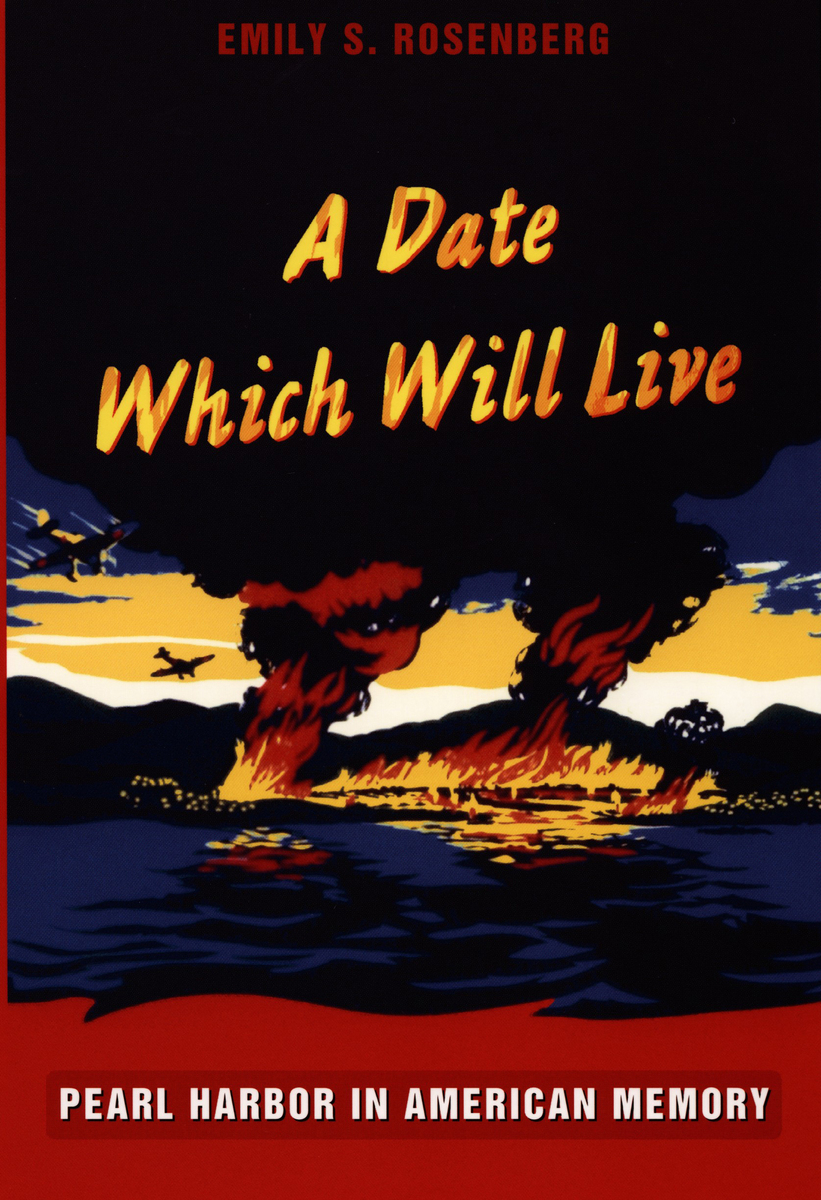
SHAFR.org is proud to present a roundtable on the Pearl Harbor attack as we approach its seventieth anniversary. We have asked four historians—Emily S. Rosenberg, Greg Robinson, John Gripentrog, and Yujin Yaguchi—to reflect on this fateful experience and address its broader significance. The contributors offer insight on a wide range of issues, concerning politics, diplomacy, memory, popular culture, racism, and education. We hope this forum will aid readers in grasping the complexity of this important event.
The entries are:

Emily Rosenberg,  Forgetting Pearl Harbor

Greg Robinson,  Pearl Harbor and Japanese Americans: Another Sort of Infamy

John Gripentrog, Pearl Harbor: The Road to Irreconcilable Worldviews

Yujin Yaguchi, Remembering Pearl Harbor in Hawai‘i: A Reflection on an Annual Workshop for U.S. and Japanese Secondary School Teachers